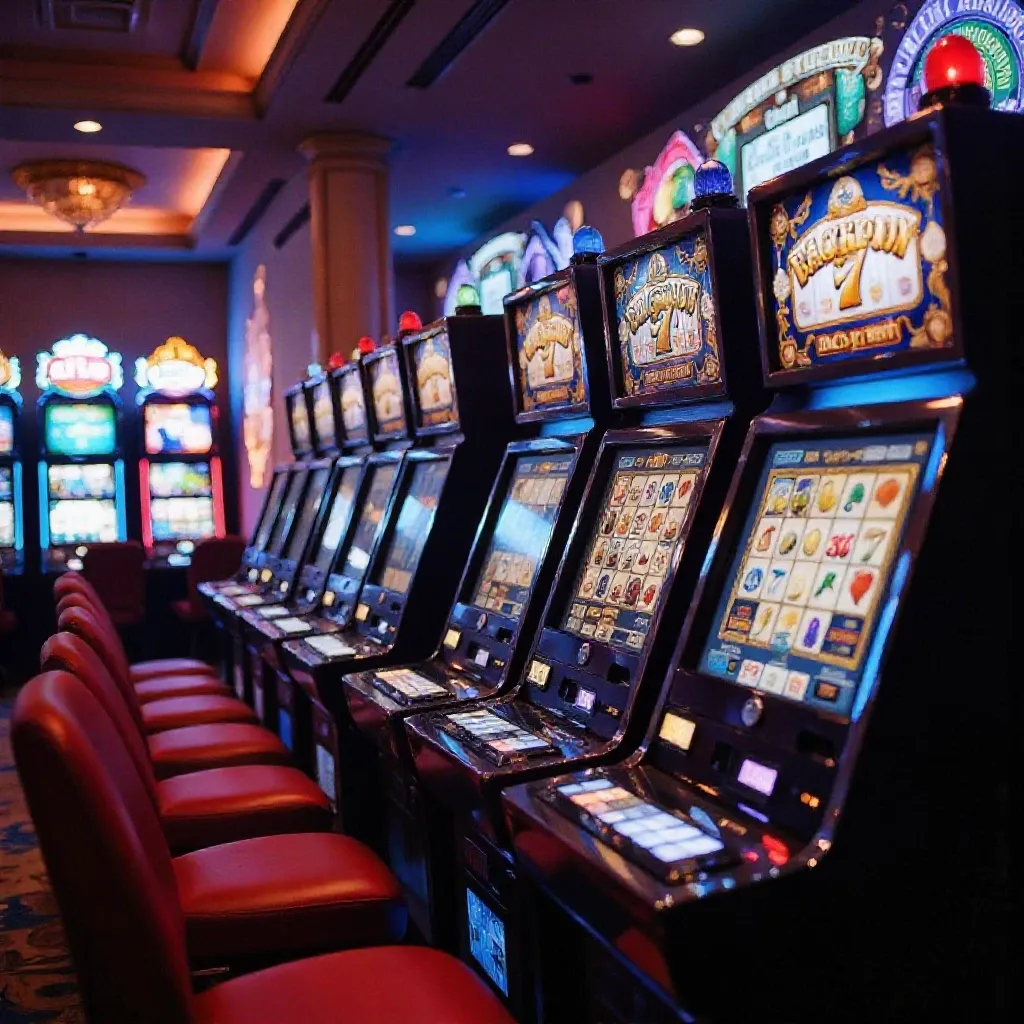
The flashing lights, the spinning reels, the tantalizing possibility of instant riches – slot jackpots hold a powerful allure. Who hasn’t dreamt of hitting that life-changing spin while playing online slots? I remember once, sitting in a Vegas casino, watching a woman erupt in cheers as bells and whistles announced her jackpot win. The energy was infectious! But beneath the surface of this exciting world lies a complex landscape of odds, probabilities, and game mechanics.
This jackpot guide aims to provide clarity and empower players to navigate the world of slot jackpots wisely. We’ll explore the different types of jackpots available, the factors influencing your chances of winning, and how to choose games that align with your playing style and budget. While this isn’t a guarantee for winning slots, understanding the intricacies will help you make informed decisions and approach casino games with realistic expectations, turning the dream of a jackpot into an informed pursuit.
Understanding Slot Jackpot Basics
To truly grasp the allure and excitement surrounding slot jackpots, it’s crucial to understand some fundamental terminology. Think of it as learning the language of slots – once you speak it fluently, the game becomes much more rewarding. Key concepts like RTP, volatility, and hit frequency are your Rosetta Stone to decoding the potential of any slot machine. Then, we’ll delve into the differenttypes* of jackpots themselves, from the steadfast reliability of fixed jackpots to the life-altering possibilities of progressive jackpots.
RTP (Return to Player) Explained
RTP, or Return to Player, is a percentage that indicates the theoretical amount of money a slot machine will return to players over a long period of time. For example, a slot with an RTP of 96% suggests that, on average, for every $100 wagered, the slot will pay back $96. Keep in mind this is theoretical and calculated over millions of spins – so your individual experience can wildly vary! RTP is a useful guide, can help in decision-making, and is often available within the game’s information or from reputable online casino review sites.
Volatility: Low, Medium and High
Volatility, also sometimes called variance, refers to the level of risk associated with playing a particular slot. Low volatility slots tend to offer more frequent, smaller wins, making them a good choice for players who prefer a steady stream of payouts and want to extend their playtime. High volatility slots, on the other hand, are riskier, offering less frequent wins, but those wins can be significantly larger! Medium volatility slots strike a balance between the two, offering a mix of smaller and larger payouts at a moderate frequency. Essentially, volatility is about how wildly your balance might swing while chasing that jackpot.
Progressive Jackpots: The Big Dream
How Progressive Jackpots Work
Progressive jackpots represent the pinnacle of excitement in the world of casino gaming, offering the tantalizing prospect of life-altering wins. Their allure lies in the ever-increasing prize pool, a sum that grows with each passing second, fueled by a network of interconnected games. Each time a player places a bet on a linked machine or online slot, a small percentage of that wager is funneled directly into the progressive jackpot. This continuous accumulation ensures that the jackpot swells, often reaching staggering proportions, transforming lucky players into overnight millionaires.
The beauty of the progressive system lies in its shared network. Multiple casinos, both online and brick-and-mortar, can contribute to the same jackpot, creating a truly massive prize pool. The more players participating across the network, the faster the jackpot climbs, amplifying the anticipation and excitement. This interconnectedness is what separates progressive jackpots from standard fixed jackpots, where the prize remains constant regardless of how many players participate.

Fixed Jackpots: Consistent Possibilities
Fixed jackpots, also known as flat-top jackpots, offer a different kind of thrill compared to their progressive counterparts. Unlike progressives, where the jackpot amount grows with every bet placed until someone wins, fixed jackpots have a predetermined, unchanging payout amount. This means the potential win is always the same, regardless of how many people have been playing the game or for how long.
The beauty of fixed jackpots lies in their consistency. Players know exactly what they stand to win if they hit the jackpot combination. This predictability makes them appealing to those who prefer a more stable and less volatile gaming experience. While the potential payout might not reach the astronomical heights of progressive jackpots, fixed jackpots often offer more frequent wins, keeping players engaged and entertained.
A strategic approach can enhance your chances of success with fixed jackpot slots. A common piece of advice is to always bet the maximum amount. This is because many fixed jackpot slots require a maximum bet to be eligible for the full jackpot payout. Betting less might reduce your overall stake, but it could also mean missing out on the biggest prize. Choosing games with favorable paytables and understanding the specific rules of each slot are also crucial elements of a winning strategy.
Many popular slot games feature fixed jackpots, offering a diverse range of themes and gameplay styles. These games provide consistent entertainment and the chance to win a substantial, predetermined prize.
Maximizing Fixed Jackpots
To maximize your chances of hitting a significant win on a fixed jackpot slot, and to ensure that you are even eligible for the top prize, it’s generally advisable to bet the maximum amount allowed. Many fixed jackpot slots only award the full jackpot payout when the maximum bet is placed.
Local vs. Wide-Area Progressives: Know the Difference
Progressive jackpots offer the allure of life-changing wins, but not all progressives are created equal. Understanding the distinction between local and wide-area progressives is crucial for informed gameplay. The primary difference lies in the network over which the jackpots accumulate.
Local Progressives: These jackpots are linked within a single casino. Multiple machines within the same establishment contribute to the same prize pool. The upside? Slightly better odds due to the smaller player pool. The downside? The jackpot size is generally smaller. For example, Casino A might feature a bank of slots all feeding into a local progressive, typically reaching into the thousands or tens of thousands. A woman at a local casino hit a \\$15,000 jackpot on a local progressive after playing for only one hour.
Wide-Area Progressives: These jackpots span multiple casinos, even across state lines. Managed by a central network, a portion of every wager from participating casinos feeds into a massive, ever-growing jackpot. This allows for potentially enormous payouts, often reaching millions. However, the odds of winning are significantly lower due to the vast player network. One lucky player won \\$1.2 million at a casino on a wide-area progressive.
Choosing between local and wide-area progressives depends on your risk tolerance and jackpot aspirations. Local progressives offer a higher chance of winning a smaller prize, while wide-area progressives provide a shot at a life-altering sum, albeit with considerably lower odds.
The Psychology of Jackpot Chasing
Jackpot chasing is a phenomenon deeply rooted in the human psyche, fueled by a potent cocktail of hope, risk, and the thrill of potential reward. Gambling psychology reveals that the allure of a massive payout can override rational decision-making, leading individuals down a path fraught with risk.
Several cognitive biases contribute to this behavior. The illusion of control makes gamblers believe they have more influence over the outcome than they actually do, perhaps through rituals or lucky charms. Near misses, where the result is just shy of a win, can be particularly insidious. They create a sense that a jackpot is within reach, encouraging further play. Loss aversion, the tendency to feel the pain of a loss more strongly than the pleasure of an equivalent gain, can also drive jackpot chasing, as individuals attempt to recoup their losses.
Casinos are adept at leveraging these psychological vulnerabilities. Marketing strategies often highlight the possibility of life-changing wins, creating an atmosphere of excitement and anticipation. The layout of a casino, with its constant stimulation and readily available games, is designed to keep players engaged and minimize their awareness of time and money spent.
For example, imagine someone who initially budgets $50 for an evening at the casino. After a series of small losses, they experience a near miss on a slot machine. The frustration of almost winning, coupled with the hope that the next spin will be the jackpot, leads them to exceed their budget and continue playing. This cycle can repeat, potentially leading to significant financial problems.
Understanding these psychological factors is crucial for responsible gambling. Recognizing cognitive biases and setting clear limits can help individuals avoid the pitfalls of jackpot chasing.

Responsible Gambling: Staying in Control
Gambling can be a thrilling form of entertainment, but it’s crucial to approach it responsibly. Remember, the primary goal should be enjoyment, not a desperate attempt to make money. When the fun stops, it’s time to stop gambling.
One of the most effective strategies for responsible gambling is setting limits. Determine a budget before you start and stick to it, regardless of whether you’re winning or losing. Once you’ve reached your limit, walk away. Similarly, set a time limit for your gambling sessions. This helps prevent you from getting carried away and losing track of time and money.
Bankroll management is another essential aspect of responsible gambling. Treat your gambling funds as separate from your everyday expenses. Never gamble with money you need for rent, bills, or other essential needs. A good rule of thumb is only to gamble with disposable income – money you can afford to lose without affecting your financial stability.
Recognizing the signs of gambling addiction is crucial. Problem gambling can manifest in various ways, including chasing losses, borrowing money to gamble, neglecting responsibilities, and feeling anxious or irritable when not gambling. If you recognize any of these signs in yourself or someone you know, it’s important to seek help.
Many resources are available to support responsible gambling. Self-exclusion programs allow you to ban yourself from gambling venues. Organizations like Gamblers Anonymous and the National Council on Problem Gambling offer support groups, counseling, and other resources to help individuals struggling with gambling addiction. Remember, seeking help is a sign of strength, not weakness. Prioritize your well-being and keep gambling a source of entertainment, not stress.
Strategies for Maximizing Your Jackpot Chances (Realistically)
While hitting a massive jackpot on a slot machine is largely a matter of luck, certain strategies can improve a player’s overall experience and potentially increase their chances – however slightly – of landing a significant win. The key is understanding that these aren’t foolproof methods for guaranteed riches, but rather ways to play smarter and extend your playtime.
Understanding RTP and Volatility
Return to Player (RTP) is a theoretical percentage indicating how much of all wagered money a slot machine will pay back to players over time. Choosing slots with higher RTPs gives a better long-term chance of recouping losses. Volatility, on the other hand, describes the risk associated with a particular slot. High volatility slots offer the potential for large payouts, but wins are less frequent. Low volatility slots provide more frequent wins, but the payouts are generally smaller. The “best” choice depends on risk tolerance and bankroll.
Bankroll Management: The Cornerstone of Any Slot Strategy
Effective bankroll management is paramount. Before even spinning the reels, determine exactly how much can be afforded to lose. Then, divide that amount into smaller wagering units. For example, if one has $100, they might choose to play with $1 bets. This allows for 100 spins, increasing the odds of eventually hitting a bonus round or a winning combination. Avoid chasing losses. Once the budget is gone, the session is over. Speaking from experience, once, while trying a new high-volatility slot, I set a firm $50 limit. I hit a few small wins early on, and when I eventually dipped below my starting amount, I cashed out what was left. It wasn’t a jackpot, but it prevented me from depleting my entire budget.
The Illusion of Control: Recognizing the Randomness
It’s crucial to remember that slot machines are governed by Random Number Generators (RNGs). Every spin is independent and has an equal chance of winning, regardless of previous outcomes. Therefore, ‘strategies’ like betting higher after a losing streak or looking for ‘hot’ machines are based on fallacy. The machine has no memory; each spin is a fresh start.
Conclusion
Navigating the world of slot jackpots requires understanding the different types of jackpots available, from the allure of massive progressive jackpots to the more predictable payouts of fixed jackpots. It’s crucial to remember that while the dream of hitting a life-changing win is enticing, grasping the odds and probabilities is essential for a realistic perspective.
Remember, responsible gambling is paramount. Approaching casino games as a form of entertainment, setting limits on both time and money, and recognizing the signs of problem gambling are all vital for a safe and enjoyable experience. By making informed decisions and prioritizing responsible play, people can appreciate the thrill of slot games without compromising their well-being. The jackpot guide serves as a reminder that while the possibility of winning exists, the primary goal should always be entertainment and enjoyment within set boundaries. Chasing slot jackpots should be about the fun of the game, not a desperate attempt to strike it rich.